Science news

Hot

Post Top Ad

LightBlog

Post Top Ad

Your Ad Spot

Saturday, 24 February 2018

SpaceX launches Falcon 9 with first broadband internet satellites

February 24, 2018 0

SpaceX launches Falcon 9 with first broadband internet satellites

"First two Starlink demo satellites, called Tintin A & B, deployed and communicating to Earth stations," SpaceX CEO Elon Musk tweeted.

SpaceX has completed another launch of its Falcon 9 rocket with first two prototype satellites of its global broadband internet-in-space project, Starlink, successfully deployed in orbit.
"First two Starlink demo satellites, called Tintin A & B, deployed and communicating to Earth stations," SpaceX CEO Elon Musk tweeted, Xinhua news agency reported. 
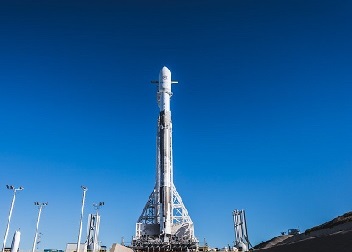
A used Falcon 9 rocket blasted off on Thursday from Space Launch Complex 4E at California's Vandenberg Air Force Base.
The Falcon 9's first stage separates from the second stage moments after about two minutes from liftoff.
The launch's primary mission is to deliver PAZ, a radar-imaging satellite, into orbit for the Spain-based company Hisdesat.
"Successful deployment of PAZ satellite to low-Earth orbit confirmed," the California-based company confirmed.
According to the mission description, equipped with an advanced radar instrument, PAZ will cover the entire globe in 24 hours, serving both commercial and government needs. Designed for a mission life of five and a half years, PAZ will orbit Earth 15 times per day, covering an area of over 300,000 sq. km from an altitude of 514 km and a velocity of seven km per second.
However, Paz was not riding alone on the recycled Falcon 9. Quietly on board were SpaceX's two experimental broadband satellites, Microsat-2a and Microsat-2b, a big first step in SpaceX's long-term plan to create satellite internet over the next decade.
The company has been relatively mum about the debut of its Starlink satellites, and about the entire programme itself.
"The Falcon launch carries 2 SpaceX test satellites for global broadband. If successful, Starlink constellation will serve least served," Musk said on Wednesday
According to the open files between SpaceX and the U.S. Federal Communications Commission (FCC), in the coming years, the private U.S. space firm hopes to create a giant constellation of about 12,000 of interlinked broadband-internet satellites that will orbit in a synchronized dance above the Earth, delivering broadband access anywhere in the world.
Some 4,425 satellites will sit at low earth orbit (LEO), an estimate of 1,150 to 1,325 km above the Earth, while another 7,518 satellites will be launched into very-low-earth orbits (VLEO), some 335 to 346 km above the Earth.
According to a tally by the Union of Concerned Scientists, there are 1,738 satellites currently orbiting the Earth.
Earlier this month, FCC Chairman Ajit Pai gave his endorsement to SpaceX's application to operate two huge constellations of broadband satellites.
Falcon 9's first stage for the mission previously supported the FORMOSAT-5 mission from SLC-4E in August 2017. SpaceX didn't attempt to recover Falcon 9's first stage after Thursday's launch, because it "was an older version booster."
However, there is another heightened interest in this launch.
By using "Mr. Steven," a large navigable platform ship with extended "arms" and a net strung between them, SpaceX was trying to "catch" at least one of the two payload fairings that enclose the satellite at the top of the rocket.
These fairings were separated from the rocket at about three minutes after launch.
The value of these fairings is about $6 million, and recovering and reusing them would save money for SpaceX. Currently, a typical Falcon 9 launch costs around $62 million.
Read More

New Google AI algorithm to predict future heart attack from retina scan

February 24, 2018 0

New Google AI algorithm to predict future heart attack from retina scan

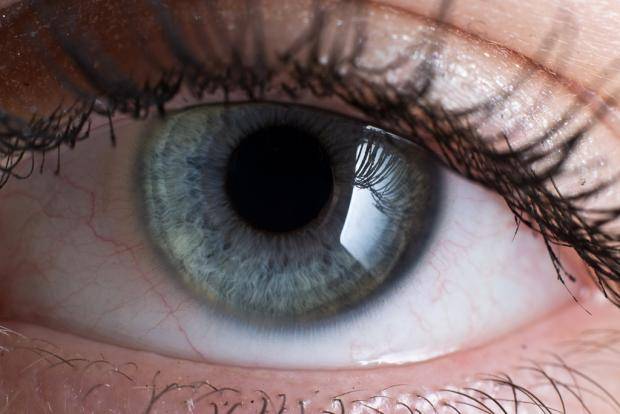
Google AI scans retinas to work out your blood pressure, age and smoking habits and predict the major risk of heart diseases

New Google AI algorithm to predict future heart attack from

Google has come up with a way to make your eyes a perfect window to your heart. A new Google-created artificial intelligence software can use to calculate your risk factors for heart disease.

According to a study recently published in the Nature Biomedical Engineering journal, an AI algorithm created by Google AI and Verily Life Sciences can predict whether a patient is likely to suffer a major cardiovascular event like a heart attack or stroke within five years, based on a photo of their retina.
So far, the predictions work about as well as presently accepted methods that are more invasive, according to the study.
The fact that disease can be spotted in the retina isn't a surprise. Doctors often spot medical conditions including diabetes, extreme high blood pressure, high cholesterol, and some cancers during eye exams, a report in World Economic Forum website said. 
To mimic that ability, the Verily and Google researchers trained AI software to identify cardiovascular risks by having the system analyze retina photos and health data from 284,335 patients, it said.  
Known risk factors for cardiovascular disease include age, blood pressure, and gender, among other things. Based on an eye scan, the algorithm was able to predict a person's age to within 3.26 years, smoking status with 71% accuracy, and blood pressure within 11 units of the upper number reported in their measurement.
Because the algorithm was so effective at assessing these factors, the researchers decided to see how well it could predict actual strokes and heart attacks.
By comparison, the European SCORE risk calculator, which requires a blood test, is currently used to predict risk for cardiovascular disease. That calculator predicted the correct scan in 72% of the cases from the same dataset, which is not much better than the AI performance — and the AI did just as well when it had access to demographic information like age, gender, and BMI.
Read More

Wednesday, 21 February 2018

Aliens could destroy life on Earth with just a ‘killer message’, says research

February 21, 2018 0

Aliens could destroy life on Earth with just a ‘killer message’, says research

In a surprising research, scientists at the University of Hawaii and Germany’s Sonneberg Observatory have warned that aliens could destroy Earth, and that too with a single message.

Aliens could destroy life on Earth with just a ‘killer
Aliens could destroy life on Earth with just a ‘killer message’: Report
In a surprising research, scientists at the University of Hawaii and Germany’s Sonneberg Observatory have warned that aliens could destroy Earth, and that too with a single message. 
The scientists claim that extraterrestrial intelligence (ETI) could send humanity a message hiding malicious AI, and that such messages should not be opened on the Earth. 

“We should consider deleting messages from aliens without reading them to avoid havoc on Earth,” the researchers were quoted by Daily Mail as saying.
Not only do these messages have the potential to contain AI that can shut down power systems, opening them can also alert aliens to our whereabouts.

The study, titled 'Interstellar communication. IX. Message decontamination is impossible,' explains how a message from space may require the use of computers to display, analyse and understand. 
“Such a message cannot be decontaminated with certainty, and technical risks remain which can pose an existential threat,” the researchers write. 
“Complex messages would need to be destroyed in the risk averse case.”
The researchers have warned that the malicious message could wreak havoc with technologies on Earth, adding that aliens could send massages such as “we will make your sun go supernova tomorrow” to cause panic. 
Researchers said aliens would rather send the messages as it would be more cost-effective.
The paper read: “It is cheaper for extraterrestrial intelligence to send a malicious message to eradicate humans compared to sending battleships.”
They even warned some humans could end up worshipping the aliens as gods after reading the secret texts, by hiding AI inside the message.
It said: “There could be a community on Earth in favour of letting it out for religious, philosophical or other reasons.
“If the AI promises to cure cancer, or offers a message of salvation, a cult could form."

Read More

Thursday, 15 February 2018

Scientists identify genetic origin in Zika virus

February 15, 2018 0

Scientists identify genetic origin in Zika virus

Following Zika infection in vitro, cells from affected individuals had significantly higher Zika virus replication and reduced cell growth.

Scientists identify genetic origin in Zika virus
In a first, researchers have found evidence of higher susceptibility of some babies to the Zika virus due to a genetic origin, a finding that may help in future vaccine strategy.
A Zika virus outbreak in Brazil in 2015 had led to widespread concern after rising incidents of microcephaly were noticed in children born to mothers infected with the virus.
The findings, led by researchers from the University of Sao Paulo in Brazil, showed that nearly six to 12 per cent of the babies born from mothers infected with Zika during pregnancy had the congenital Zika syndrome.
Congenital Zika syndrome is a unique pattern of birth defects found among foetuses and babies infected with Zika virus during pregnancy. 
It is characterised by partially collapsed skull, decreased brain tissue, damage (i.e., scarring, pigment changes) to the back of the eye, clubfoot, etc, according to the Centres for Disease Control and Prevention (CDC).
Congenital Zika syndrome causes early brain development impairment by affecting neural progenitor cells -- that can lead to the cells that form the brain and other parts of the central nervous system.
The results, published in the journal Nature Communications, indicate that the development of the Zika syndrome in babies is not random, it depends on neural progenitor cells susceptibility. 
It is possibly related to variants in several genes or to mechanisms that control gene expression and protein production.
"We demonstrated that the infection is not random. It reinforces our hypothesis of a genetic component increasing the susceptibility to congenital Zika syndrome," said lead author Mayana Zatz from the varsity.
For the study, the team examined nine pairs of twins from six Brazilian states in which at least one baby had microcephaly. 
From these babies, three pairs of non-identical, discordant twins had their blood samples collected, from which neural progenitor cells were derived.
Then, the researchers infected the progenitor cells with a Brazilian Zika virus strain. 
Prior to Zika virus infection the progenitor cells from congenital Zika syndrome babies show a significantly different gene expression signature that are key to a neurodevelopmental programme. 
Following Zika infection in vitro, cells from affected individuals had significantly higher Zika virus replication and reduced cell growth. 
These results confirmed the hypothesis of a genetic or epigenetic influence on susceptibility to congenital Zika syndrome and microcephaly. 
However, a single gene cannot explain the cases of congenital Zika syndrome development nor the brain resistance to Zika virus, the researchers said.
"If the baby has these genetic susceptibility factors, we believe he will not have microcephaly unless he is infected by the Zika virus. Maybe we can identify these people and prioritise them in a future vaccine strategy," Zatz noted.
Read More

Climate change speeding up sea level rise, satellites show

February 15, 2018 0

Climate change speeding up sea level rise, satellites show


Researchers used the data dating back to 1993 to observe the levels of the world's oceans, a report said.

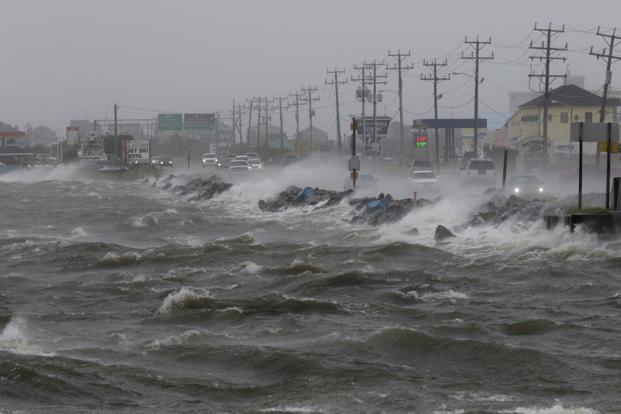
Picture for representational purpose.
Climate change has accelerated sea level rise and the rate at which it is rising is increasing every year, a study citing satellite data has revealed.
Researchers, led by the University of Colorado-Boulder professor of aerospace engineering sciences Steve Nerem, used the data dating back to 1993 to observe the levels of the world's oceans, reports CNN.
Using satellite data rather than tide-gauge data that is normally used to measure sea levels allows for more precise estimates of global sea level, since it provides measurements of the open ocean.
The team observed a total rise in the ocean of 7 cm in 25 years of data, which aligns with the generally accepted current rate of sea level rise of about 3 mm per year, according to a study released on Monday in the Proceedings of the National Academy of Sciences.
But that rate was not constant.
"This acceleration, driven mainly by accelerated melting in Greenland and Antarctica, has the potential to double the total sea level rise by 2100 as compared to projections that assume a constant rate, to more than 60 cm instead of about 30," said Nerem.
Sea level rise of 65 cm would cause significant problems for coastal cities around the world. Extreme water levels, such as high tides and surges from strong storms, would be made exponentially worse.
Read More

Partial Solar Eclipse 2018: What time is it, how to watch, safety tips, all you need to know

February 15, 2018 0

Partial Solar Eclipse 2018: What time is it, how to watch, safety tips, all you need to know

People can watch the live streaming at the YouTube channel of NASA.

Partial Solar Eclipse 2018
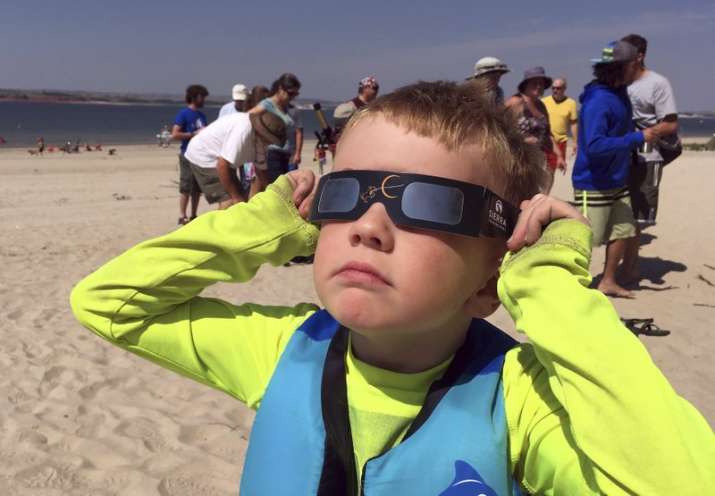
Partial Solar Eclipse 2018Photo:AP
Sky gazers are all set to witness the first solar eclipse of 2018 though it's a partial solar eclipse (aanshik surya grahan). total solar eclipse and partial solar eclipse are different as in the latter only part of the solar disk is obscured. Scientists have warned that any kind of eclipse should not be watched with naked eyes. Aanshik surya graham is going to take place today on February 15 and will be visible in countries like Argentina, Paraguay, Chile and Uruguay, and in Antarctica.

Where to watch

People can watch the live streaming on the YouTube channel of NASA. It can be seen from 6:55 PM to 10:47 PM (UTC) and 12:25 AM to 4:17 AM (IST, February 16).

Why should solar eclipse not be seen with naked eyes?

Watching solar eclipse or partial solar eclipse with naked eyes, even for few seconds, can result in impairment of vision. Thus, scientists have always suggested to special-purpose solar filters to watch these celestial events.

Things to keep in mind while using solar filters

NASA has suggested that people should be very careful while buying solar filters. In case they are scratched or damaged, don’t use it. Don’t remover your filters while watching the eclipse. First turn and then remove it. Don’t look at the partially eclipsed sun with telescope, binoculars or unfiltered camera.
Read More

Post Top Ad

Your Ad Spot